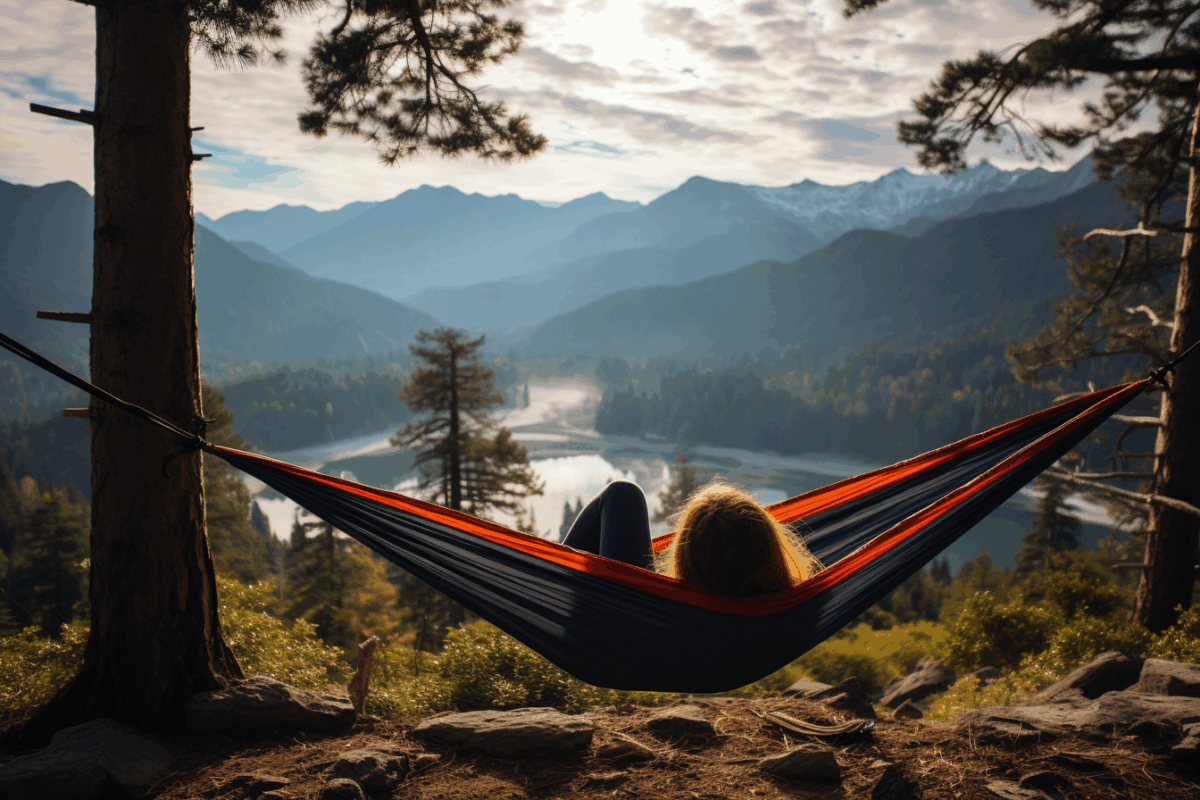
There is not much like the soft sway of a hammock under the trees. Hammocks have grown into a favorite piece of outdoor gear. They give you a fine spot to lounge and a bed under the stars. Maybe you want a cozy place to chill. Maybe you want a new way to sleep outside. Either way, the right hammock makes the whole trip better.
The Allure and Functionality of Hammocks
A hammock is more than fabric strung between two points. It stands for rest, fun, and a close tie to nature. You can hang alone by a mountain lake. You can gather with friends in a forest clearing. Hammocks fit right into outdoor life. They give you comfort in many forms and a fresh view of the wild.
Navigating Through Hammock Types and Sizes
Single vs. Double: Swaying Solo or Sharing the Serenity?
Single or double? It comes down to how you plan to use it and how you like to lounge.
Single Hammocks:
- Tailored for the Solo Explorer: Singles run 4 to 5 feet wide and are made for one. You get a snug spot to relax, read, or nap under the leaves.
- Weight Conscious: Going backpacking with a tight pack? Singles are lighter and pack smaller, so they save ounces on long treks.
- Weight Limitations: Most singles hold 250 to 400 pounds. Ultralight models sit at the low end of that range.
Double Hammocks:
- Space to Spare: Doubles often run 5 to 6 feet wide. You get room to stretch, roll, or share the sway with a friend under the stars.
- Cozy or Spacious—Your Choice: Going solo? A double still pays off. Sleep on a slight angle for a flatter lay, or wrap up in a blanket with room to spare.
- Robust Weight Capacities: Doubles hold 400 to 500 pounds. They carry more weight with a safe, steady feel.
Think about your trips. A solo escape to the woods? A lazy park day with a loved one? Your answer points you to a single or a double.
Ensuring Comfort and Durability in Your Hang
Fabric’s Denier:
- Strength and Durability: Denier tells you how tough the fabric is. A higher number means thicker cloth that stands up to more wear and tear.
- Lightweight Ventures: A lower denier saves weight and suits ultralight trips. Just treat it with care so it lasts.
Hammock Length:
- Personalized Comfort: Length does not vary much between models. Still, pick one at least 2 feet longer than you are tall. Your body can then relax and settle in.
- The Longer, The Better?: A longer hammock lets you lie flatter. That helps if you sleep in it all night, since it keeps your spine in line.
Additional Specs:
- Weight and Packability: Check the weight and packed size. Match them to your trip, be it backpacking, camping, or a day hang.
- Material Type: The fabric matters too. Parachute nylon, cotton, and high-denier nylon each breathe, wear, and feel different on your skin.
Match your hammock to your trips, your comfort needs, and the memories you want to make. Single or double, high or low denier, each one gives you a fine perch to soak in the calm of the woods.
Hammock Accessories: Crafting a Seamless and Elevated Hammocking Experience
A hammock strung between two trees is a simple joy. But the right add-ons open up much more, above all in rough weather or new terrain. They bring comfort, safety, and options. Here is a closer look at what each one does for your hang.
Suspension Systems: The Foundation of Your Hang
The suspension system does the quiet work. It bears your weight and keeps the hammock locked to its anchors.
- Strap Width: Use straps at least 0.75 inches wide. Wide straps protect tree bark, so your hangs stay kind to the woods.
- Length and Adjustability: Check strap length and how it adjusts. Trees stand at odd distances, and longer straps give you more spots to set up.
- Material and Strength: Pick tough straps that shrug off weather. They must hold your weight without fail, hang after hang.
Underquilts: A Cocoon of Warmth
An underquilt is more than a blanket. It hugs the outside of your hammock and traps your body heat against the cold.
- Material and Insulation: Check the fill and fabric. Make sure they keep you warm in the climate you plan to visit.
- Fit and Setup: The quilt should fit your hammock's type and size. It should be quick to set up and adjust, so no cold drafts break your sleep.
- Weight and Packability: For backpacking, check the weight and packed size. It has to fit your pack and your travel plans.
Tarps: Your Shield Against the Elements
A tarp is your shield from the sky. It keeps rain, snow, and harsh sun off your hang.
- Material and Durability: Pick a tarp made from tough, weatherproof cloth. It should hold up in all kinds of storms.
- Size and Shape: Tarps come in many sizes and shapes. Choose one that covers your hammock and gear for the shelter you need.
- Setup and Adjustability: A good tarp goes up fast and adjusts with ease. When the weather turns, you can adapt and stay dry.
Bug Nets: A Barrier Between You and Tiny Intruders
A bug net is your wall against pests that fly and crawl. It keeps your lounge and your sleep in peace.
- Mesh Size: Choose “no-see-um” mesh. It stops even the smallest pests.
- Accessibility and Setup: Pick a net that is easy to get in and out of. It should also set up fast and hold firm.
- Coverage: Make sure the net wraps all the way around. Full 360-degree coverage means no bites from any side.
Additional Fun and Functional Accessories
- Hammock Stands: No trees? A stand lets you hang wherever you please.
- Drip Straps: Rain can run down your straps and into your hammock. Drip straps steer that water away from your cozy nook.
- Storage Solutions: Gear lofts, ridgelines, and pockets keep your key items within arm's reach.
Pick the add-ons that match your trips and your taste. With the right setup, your hammock is ready for sunny lounges and cozy, starlit sleeps alike.
Exploring Hammock Tents and Sleep Systems - Blending Leisure and Shelter for Exquisite Outdoor Slumbers
A hammock tent blends the free feel of a hammock with the shelter of a tent. You sleep above the ground, guarded from the weather, yet still close to the wild around you.
Hammock Tents: A Floating Fortress in the Wild
A hammock tent lifts your bed and wraps it in cover. It turns a night outside into a treat.
- Integrated Shelter: Most hammock tents join the hammock, bug net, and rainfly in one unit. Setup is quick, and you stay shielded from weather and pests.
- Structural Variants: Some models add light poles. The poles give the hammock a more tent-like shape, with more room inside.
- Versatility in Environments: Your bed hangs above the ground. Wet, rocky, or bug-filled ground below does not rule your camp spot, so you get far more choice in where to sleep.
Sleep Systems: Tailoring Your Hammock to Diverse Adventures
A sleep system is a setup you build yourself. You mix and match parts to fit each trip, for both sleep and lounging.
- Modular Approach: Pick the parts you need, like an underquilt, a tarp, and a bug net. Match them to the weather, the place, and your comfort needs.
- Weight Considerations: Carry only the parts you need. That keeps your pack light and lean on backpacking trips.
- Personalized Comfort: You choose what matters most for your sleep and rest. Every hang feels like your own.
Pros and Cons: Weighing Your Sleep Options
Hammock tent or your own sleep system? Weigh ease against options, and think about how you camp.
- Setup Ease vs. Flexibility: A hammock tent often sets up faster and simpler. A build-your-own system adapts better to varied trips and weather.
- Weight and Packability: A hammock tent packs as one unit, which can save space. Separate parts can spread through your pack to balance the load.
- Cost Implications: A hammock tent may cost less or more than buying parts over time. It depends on the brands and gear you choose.
Exploring Hammock Tents and Sleep Systems for Different Campers
- Backpackers: Go with an ultralight hammock tent or a lean sleep system. Low weight and small packed size come first on the trail.
- Car Campers: Weight is no issue at the car. Go big with a sturdy hammock tent or a plush sleep system for max comfort and space.
- Adventurous Explorers: Face lots of terrain and weather? A flexible sleep system adapts as your plans change.
Think about where you camp, and how. The right choice will have you sleeping among the trees, under the night sky.
Hammock Setup Tips and Responsible Usage - Ensuring Comfort, Safety, and Sustainability in Your Outdoor Hangs
A good hang is comfy and safe. It also treats the land with care. Set up well, and you protect both your sleep and the woods that host it.
Hammock Setup Tips: Crafting a Cozy and Secure Hang
Setup is more than a couple of knots. A stable, comfy, and safe hang makes all the difference.
- 30-Degree Rule: Hang your straps at a 30-degree angle from level. This gives the hammock a gentle sag. It feels cozy and eases strain on the straps and anchor points.
- Sleeping Angled: Do not lie straight down the middle. Sleep at a slight angle instead. Your body lies flatter, and you rest better.
- Strap Security: Fasten your straps well and check them often for wear. Use solid knots or clips so you never take a spill.
Responsible Hammocking: Treading Lightly in Nature
Hammocks bring you close to nature. Keeping those places healthy matters most of all.
- Tree-Friendly Straps: Use wide, tree-friendly straps. They spread the load and protect the bark and the wood beneath it, so the tree stays healthy.
- Leave No Trace: Follow Leave No Trace rules. Pick sturdy spots that can handle use, and leave each site just as you found it.
- Wildlife Respect: Mind the local wildlife. Do not disturb their homes or routines. Share the space in peace.
Considerations for Different Environments
- Backcountry and Remote Areas: Deep in the wild, set up fast and clean. Be ready for quick shifts in weather or terrain.
- Crowded and Popular Spots: In busy areas, follow any site rules. Respect other campers and keep your footprint small.
- Personal and Group Hangs: Solo or with a group, space your setups out. Do not crowd the anchor trees, and respect what the site can hold.
Adapting to Seasons and Weather
- Cold Weather: In the cold, add insulation. An underquilt, a top quilt, and maybe a sleeping pad keep the chill off your back.
- Rainy Conditions: Size your tarp right and pitch it tight. It will keep you and your gear dry when the rain comes.
- Sunny and Hot Days: On hot days, hang in the shade. A light, breathable fabric helps air flow and keeps you cool.
Set up with care, hang with respect, and enjoy the ride. Nature hosts your sleep in the sky. Treat it well, and every hang will be a good one.